
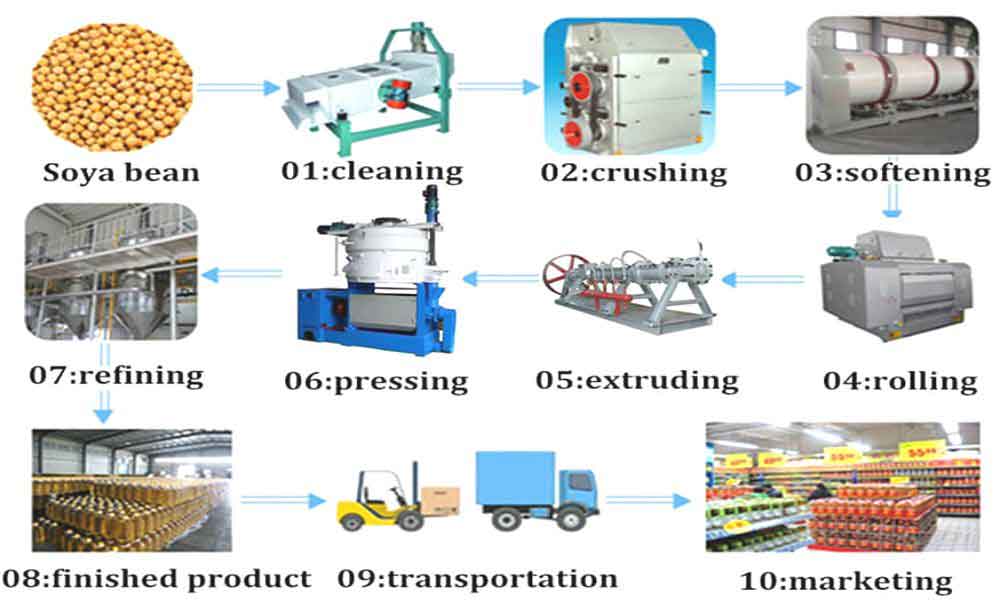
In recent years, as the demand for edible oil quality continues to rise, the application of automation equipment in soybean oil refining has become a focal point in the industry. This article delves into the full - process refining technology from crude oil pre - treatment to finished product packaging, focusing on how to improve oil color, taste, and extend shelf life through optimized control of free fatty acids, pigment removal, and antioxidant technology.
When it comes to soybean oil refining, several key indicators play a crucial role in determining the final product quality. Free fatty acids (FFA), color, and oxidation stability are the core factors that directly impact the sensory experience and shelf life of the oil. For example, high FFA content can lead to an unpleasant taste, while poor oxidation stability shortens the product's shelf life. By focusing on these indicators, refineries can achieve a significant leap in product quality.
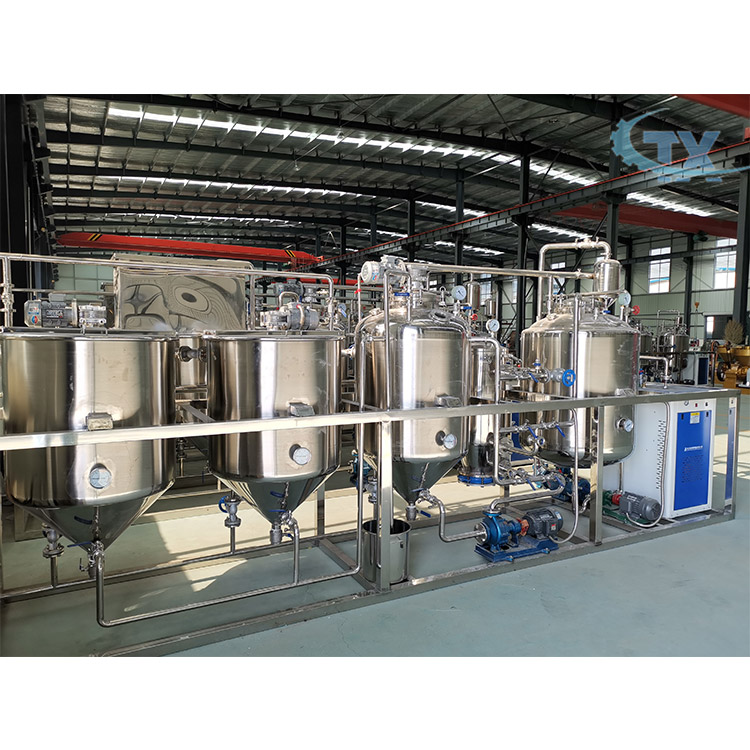
There are three mainstream refining systems in the industry: batch, semi - continuous, and continuous. Each system has its own characteristics in terms of production capacity, energy consumption, and operational complexity.
Batch systems are suitable for small - scale production due to their relatively low initial investment and easy operation. However, they have lower production efficiency and higher energy consumption per unit. Semi - continuous systems offer a balance between flexibility and efficiency, making them a good choice for medium - sized refineries. Continuous systems, on the other hand, are highly efficient and suitable for large - scale production. They can achieve high - volume output with relatively low energy consumption per unit, but require a large initial investment and high - level technical support.
A comparison table (as shown in the following information chart) can clearly illustrate the differences between these three systems:
| System Type | Production Capacity | Energy Consumption | Operational Complexity | Suitable Scenarios |
|---|---|---|---|---|
| Batch | Low | High per unit | Low | Small - scale production |
| Semi - continuous | Medium | Medium | Medium | Medium - sized refineries |
| Continuous | High | Low per unit | High | Large - scale production |
In the actual refining process, refineries often encounter issues such as high FFA residue, dark color, and short shelf life. High FFA residue can be caused by incomplete neutralization during the refining process. Dark color may result from ineffective pigment removal. And a short shelf life is usually due to poor oxidation control.
To address these problems, practical solutions have been developed. For high FFA residue, adjusting the neutralization process parameters can effectively reduce the FFA content. For dark color, advanced pigment removal technology, such as the use of activated carbon or bleaching clay, can be employed. To extend the shelf life, adding antioxidants and improving the storage environment are effective measures.

The introduction of new technologies, such as online detectors and PLC automatic control systems, has brought significant improvements to soybean oil refining. Online detectors can continuously monitor key indicators in real - time, enabling timely adjustments to the refining process. PLC automatic control systems can accurately control various parameters, ensuring consistency between batches and reducing human dependence.
For example, a certain factory introduced a new PLC automatic control system and an online FFA detector. After implementation, the shelf life of the soybean oil was extended by 4 months, and the color score increased by 2.3 points. These real - world case data demonstrate the effectiveness of new technologies in improving production efficiency and product consistency.
In conclusion, the application of automation equipment and new technologies in soybean oil refining offers a practical path for food processing enterprises to upgrade their technology. If you are a food processing enterprise looking to enhance your soybean oil refining process, don't miss this opportunity to revolutionize your production. Our company is more than just a provider of equipment; we are the guardians of quality. Click here to learn more about our advanced soybean oil refining solutions and take the first step towards a quality leap!
Do you have any questions or experiences regarding soybean oil refining? Share them with us in the comments below!

 216
|
216
|
 soybean oil refining process
phospholipid removal technology
continuous oil refining system
oil degumming and bleaching
edible oil processing techniques
soybean oil refining process
phospholipid removal technology
continuous oil refining system
oil degumming and bleaching
edible oil processing techniques
 102
|
hydraulic oil press
cold pressed soybean oil
screw oil press
edible oil extraction technology
integrated oil filtration
102
|
hydraulic oil press
cold pressed soybean oil
screw oil press
edible oil extraction technology
integrated oil filtration
 299
|
soybean oil production
oil manufacturing process
299
|
soybean oil production
oil manufacturing process
 206
|
soybean oil press
small-scale soybean oil press
industrial soybean oil press
206
|
soybean oil press
small-scale soybean oil press
industrial soybean oil press
 268
|
small-scale soybean oil press
hydraulic oil press operation
screw oil press comparison
cold-pressed soybean oil
integrated oil filtration system
268
|
small-scale soybean oil press
hydraulic oil press operation
screw oil press comparison
cold-pressed soybean oil
integrated oil filtration system






.jpg)