Soybean oil is one of the most widely consumed edible oils globally. The quality of soybean oil is largely determined by its refining process. This article delves deep into the soybean oil refining process, exploring the factors that affect key quality indicators such as color and shelf life, and specifically focusing on the role and techniques of temperature control in the refining process.
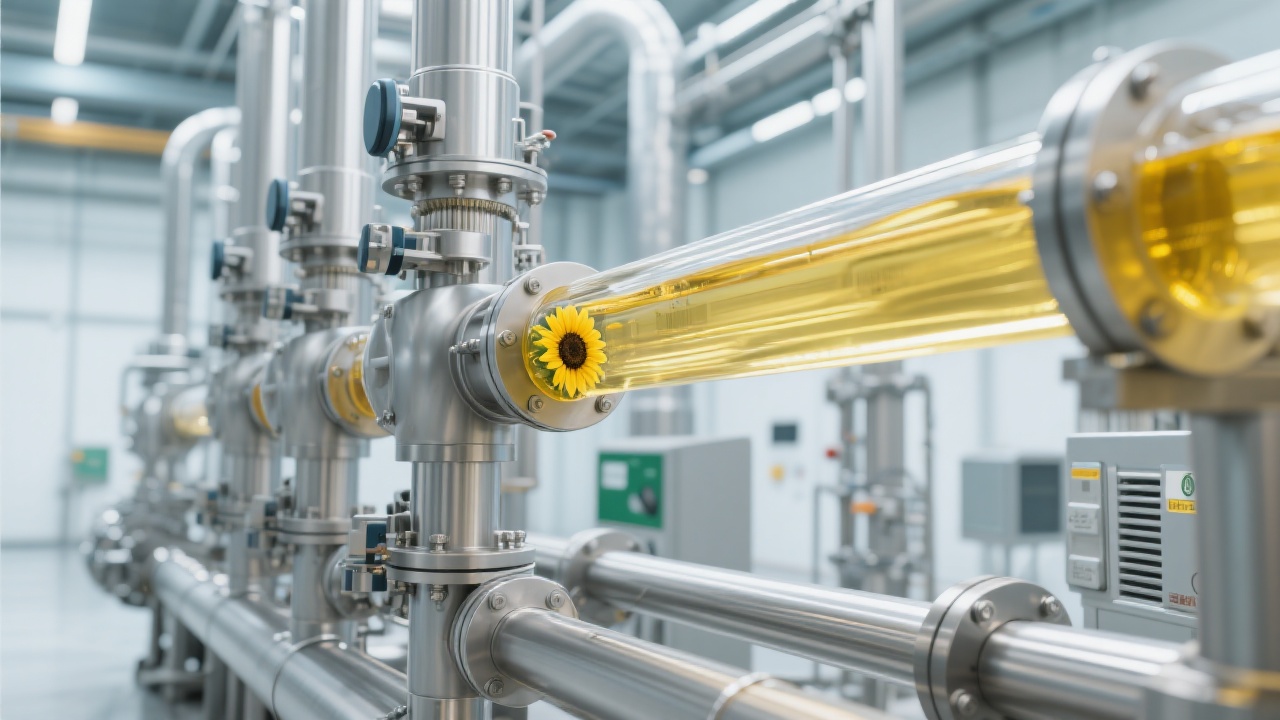
The soybean oil refining process mainly includes steps to remove impurities such as free fatty acids, phospholipids, and pigments. For example, the degumming process aims to remove phospholipids. Typically, the temperature for degumming is controlled between 60 - 70°C, which can effectively reduce the phospholipid content to less than 10 ppm. The neutralization process is used to remove free fatty acids, and the temperature is usually set at around 70 - 80°C, enabling the reduction of free fatty acid content to below 0.1%.
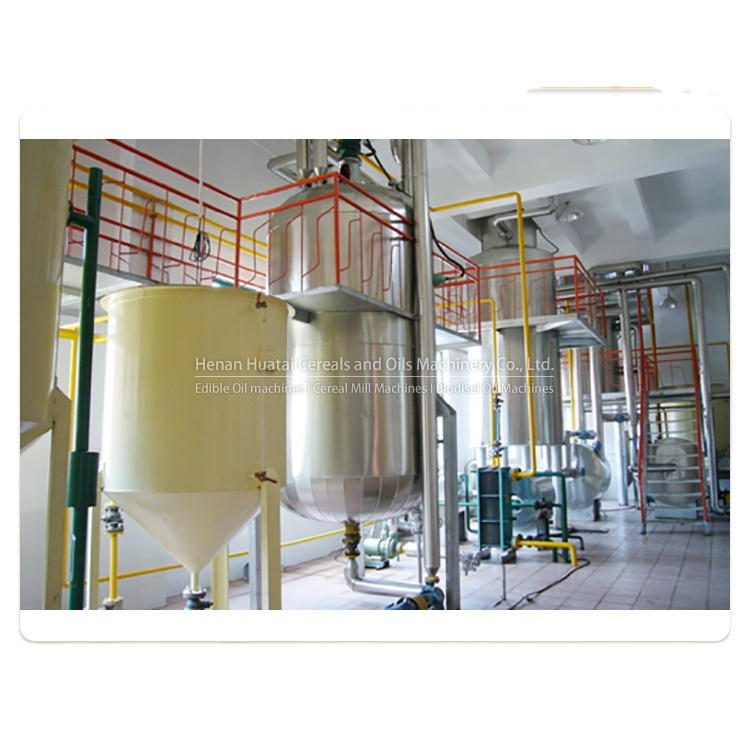
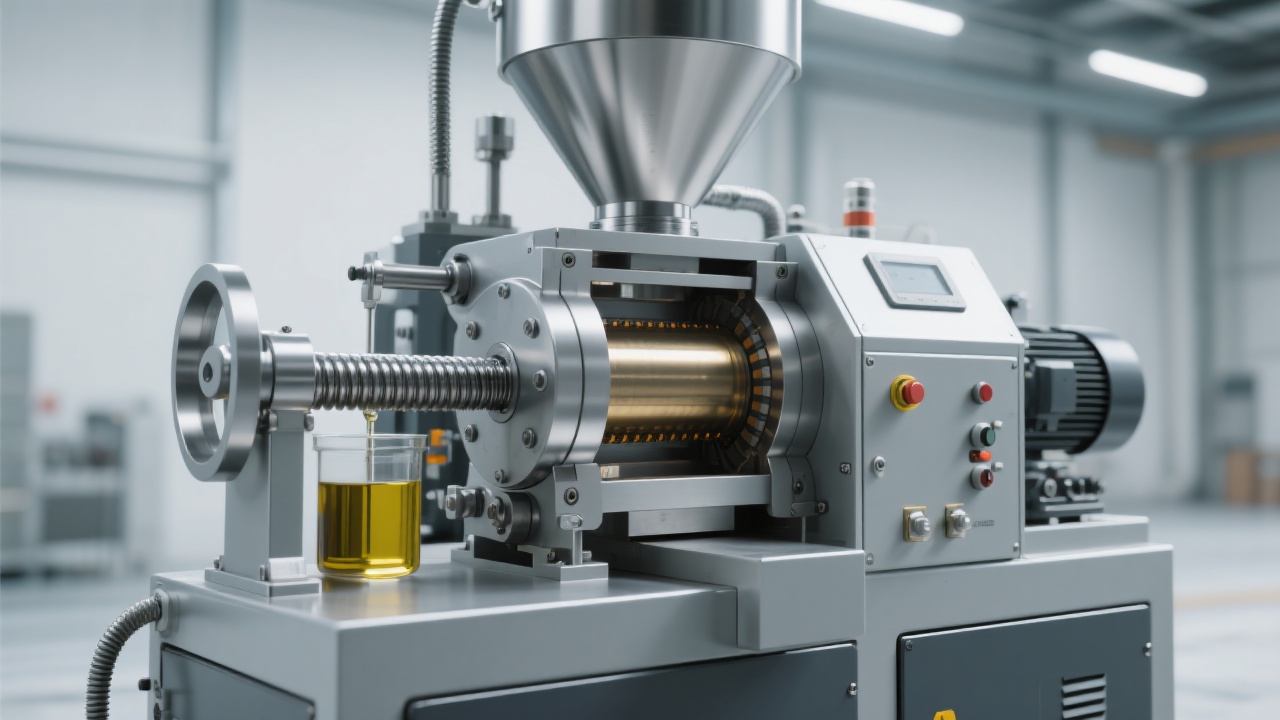
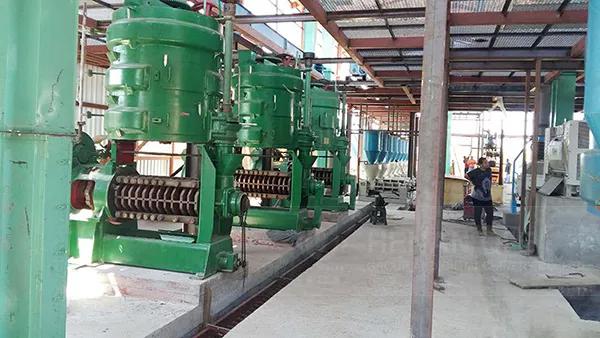
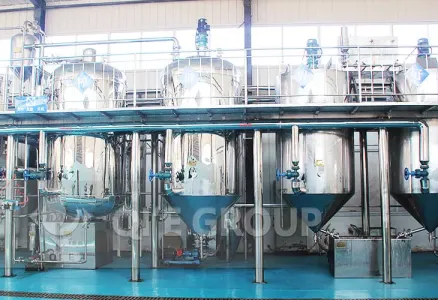
There are three main types of soybean oil refining systems: batch, semi - continuous, and continuous. A batch refining system is suitable for small - scale production, with a processing capacity of about 1 - 10 tons per day. It has relatively low automation, mainly relying on manual operation. A semi - continuous refining system has a processing capacity of 10 - 50 tons per day, with medium - level automation. The continuous refining system is designed for large - scale production, with a processing capacity of over 50 tons per day and high automation.
| Refining System | Processing Capacity (tons/day) | Automation Level |
|---|---|---|
| Batch | 1 - 10 | Low |
| Semi - continuous | 10 - 50 | Medium |
| Continuous | Over 50 | High |
Temperature control is crucial in the soybean oil refining process, especially for the color and shelf life of the oil. If the temperature is too high during the decolorization process, it may cause the decomposition of some beneficial components in the oil, leading to a darker color. Generally, the temperature for decolorization is controlled between 90 - 110°C. In terms of shelf life, proper temperature control can inhibit the oxidation of the oil. For example, storing the refined oil at a low temperature of around 10 - 15°C can significantly extend its shelf life from 6 months to 12 months or more.
Many industry players have optimized their production processes through effective temperature control. For instance, Company A adopted a continuous refining system and precisely controlled the temperature in each stage. As a result, the color of their soybean oil became clearer, and the shelf life was extended by 50%, which greatly improved the market competitiveness of their products.
If you are looking to optimize your soybean oil refining process and improve product quality, our professional soybean oil refining solutions can help. We offer a range of high - performance refining machines and comprehensive technical support. Click here to learn more.
 219
|
219
|
 soybean oil press machine comparison
soybean oil extraction technology
types of oil press machines
soybean oil press machine comparison
soybean oil extraction technology
types of oil press machines
 407
|
soybean oil press
integrated oil filtration system
screw press vs hydraulic press
soybean oil purity
oil press equipment selection
407
|
soybean oil press
integrated oil filtration system
screw press vs hydraulic press
soybean oil purity
oil press equipment selection
 445
|
soybean oil
oil production industry
market trends
sustainability in oil production
445
|
soybean oil
oil production industry
market trends
sustainability in oil production
 328
|
Palm Kernel Oil Extraction Equipment
Palm Kernel Oil Refining Machine
Oil Refining Equipment
Automated Palm Oil Machinery
High Efficiency Oil Refining
Eco-friendly Palm Kernel Oil Process
Long-lasting Oil Extraction Equipment
Palm Oil Production Solutions
Comprehensive Oil Processing Services
328
|
Palm Kernel Oil Extraction Equipment
Palm Kernel Oil Refining Machine
Oil Refining Equipment
Automated Palm Oil Machinery
High Efficiency Oil Refining
Eco-friendly Palm Kernel Oil Process
Long-lasting Oil Extraction Equipment
Palm Oil Production Solutions
Comprehensive Oil Processing Services
 81
|
Soyabean Refined Oil Making Machine
Soybean Oil Press Machine
Batch Oil Refinery Machine
Continuous Oil Refinery Machine
Semi-Automatic Refinery Machine
Mini Oil Refinery Machine
Refined Soybean Oil Production
Effective Soybean Oil Refining
High-Quality Vegetable Oil Equipment
Oil Refining Technology Solutions
81
|
Soyabean Refined Oil Making Machine
Soybean Oil Press Machine
Batch Oil Refinery Machine
Continuous Oil Refinery Machine
Semi-Automatic Refinery Machine
Mini Oil Refinery Machine
Refined Soybean Oil Production
Effective Soybean Oil Refining
High-Quality Vegetable Oil Equipment
Oil Refining Technology Solutions