How to Choose Edible Oil Production Line Equipment for Your Oil Mill
2026-08-11
Qi'e Grain and Oil Machinery Co., Ltd.
Industry Guide
Qi'e Grain and Oil Machinery Co., Ltd. explains how to select edible oil production line equipment based on raw materials, capacity, processing technology, refining needs, automation, energy use, and plant conditions.
Selecting edible oil production line equipment is a process-design decision, not simply a machine purchase. The right configuration should match the characteristics of the oilseed, planned throughput, target oil quality, process route, utility conditions, and available building space. Qi'e Grain and Oil Machinery Co., Ltd. supports oil mill investors and processors with practical equipment selection guidance for new projects, capacity expansion, and processing-line upgrades.
Start with the Raw Material and Product Objective
Different oilseeds require different handling, preparation, extraction, and refining considerations. Soybeans, rapeseed, sunflower seed, palm kernel, peanut, sesame, and other materials vary in oil content, moisture, impurity level, hull condition, and processing behavior. These differences influence the equipment sequence and the operating parameters required for a stable edible oil production line.
Oilseed Properties
Consider seed size, moisture, foreign matter, shell or hull content, oil content, and storage condition before defining cleaning and pretreatment equipment.
Required End Product
Clarify whether the project is intended for crude oil, filtered pressed oil, refined edible oil, or multiple oil products with different quality requirements.
By-Product Handling
Plan for oil cake, meal, husks, sediment, soapstock, and other process outputs as part of the overall material flow.
Define Capacity Before Configuring the Line
Oil mill capacity planning should be based on realistic raw-material supply, operating hours, seasonal production patterns, labor availability, storage capacity, and future growth expectations. A line that is too small may restrict output, while an oversized configuration can increase investment, energy demand, and operational complexity.
| Planning Factor |
Why It Matters |
Equipment Selection Impact |
| Daily processing target |
Sets the expected material throughput. |
Guides sizing of conveyors, cleaners, presses, extractors, tanks, and refining units. |
| Operating schedule |
Determines whether capacity must be concentrated into fewer working hours. |
Affects the required throughput margin and equipment continuity. |
| Expansion plan |
Helps avoid unnecessary replacement when production demand increases. |
May support phased installation, reserved space, or compatible downstream interfaces. |
Choose the Appropriate Processing Route
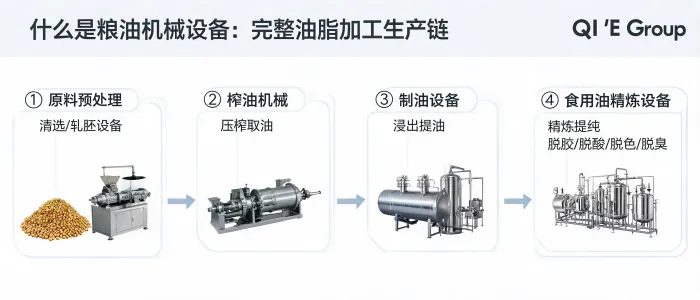
The central process route usually combines pretreatment with mechanical pressing, solvent extraction, or a coordinated pressing-and-extraction arrangement. The appropriate choice depends on the oilseed type, planned scale, desired oil recovery approach, product positioning, and site-specific operating conditions.
Pretreatment
Cleaning, screening, dehulling, crushing, flaking, conditioning, and cooking may be arranged according to the incoming material and selected extraction method. Effective pretreatment helps prepare oilseeds for consistent downstream processing.
Mechanical Pressing
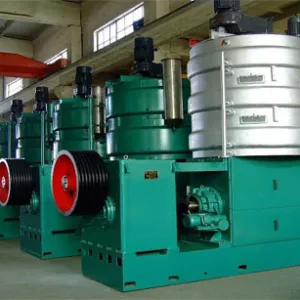
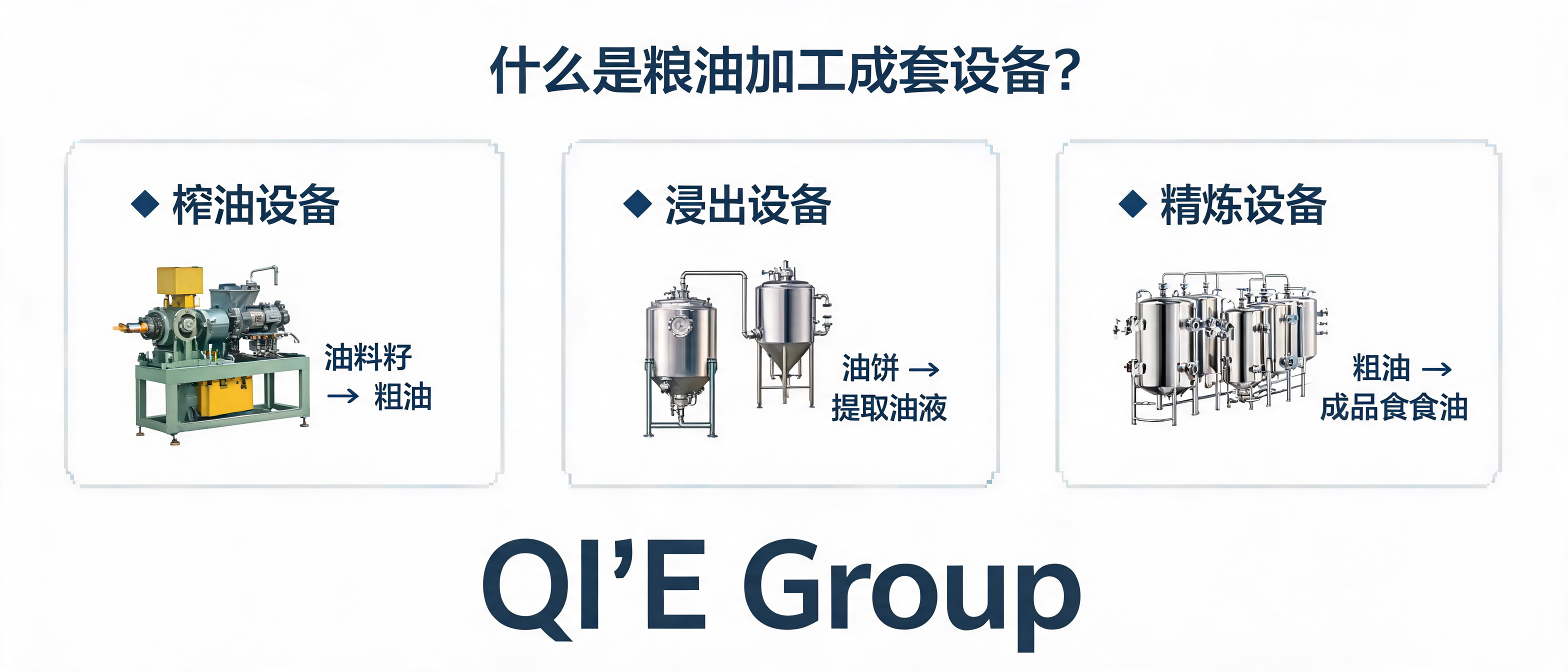
Oil pressing equipment is commonly considered where a mechanical extraction route suits the raw material, production objective, and operating model. Filtration and crude-oil handling should be considered alongside the press itself.
Solvent Extraction
For projects considering solvent extraction, the complete process must be evaluated as an integrated system, including preparation, extraction, desolventizing, oil recovery, safety provisions, and utility coordination.
Match Refining Equipment to Oil Quality Requirements
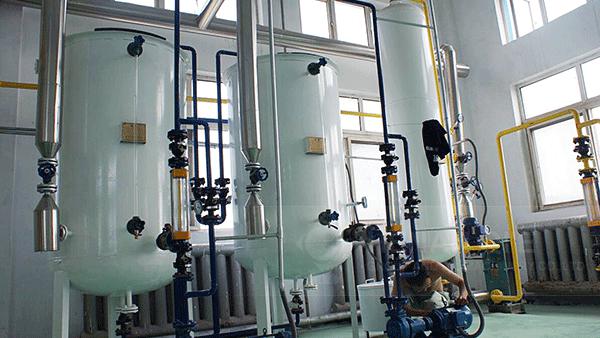
Crude oil from pressing or extraction may require further processing before it is suitable for the intended market. Refining configuration should be selected according to the properties of the crude oil and the required final product standard. Depending on the project, the refining section may include degumming, neutralization or deacidification, bleaching, deodorization, dewaxing, filtration, and related oil handling stages.
Refining should be planned as part of the whole edible oil production line. The condition of the crude oil, the selected pretreatment route, storage arrangements, and final packaging expectations all affect refining equipment configuration.
Evaluate Automation, Energy Use, and Plant Conditions Together
A practical vegetable oil processing configuration balances process control with the operational capabilities of the facility. Automation can improve monitoring and coordination across production stages, but the appropriate level should reflect the project scale, staffing model, maintenance capability, and budget.
- Utility compatibility: Review power supply, steam, water, cooling, ventilation, and other required utilities before finalizing the layout.
- Space and logistics: Allow for material receiving, storage, processing, maintenance access, oil tanks, finished-product movement, and by-product handling.
- Energy management: Compare equipment arrangements in terms of process integration and the resources needed to operate the planned line.
- Maintenance access: Select layouts that permit inspection, cleaning, servicing, and replacement work without disrupting the entire production flow.
A Structured Selection Process for Oil Mill Projects
- Confirm the oilseed and expected product: identify raw-material condition, target oil type, and anticipated product quality.
- Set capacity and operating assumptions: establish throughput, working schedule, storage needs, and reasonable development plans.
- Define the process route: align pretreatment, pressing or extraction, filtration, refining, and auxiliary systems.
- Review site and utilities: check building space, process flow, electrical supply, water, steam, and logistics conditions.
- Configure compatible equipment: select equipment as a coordinated production line rather than as isolated machines.
Plan for a Compatible, Practical Production Line
Qi'e Grain and Oil Machinery Co., Ltd. provides oil pressing equipment, oil production line equipment, and edible oil refining equipment for B2B processing projects. A well-considered equipment selection process helps align raw materials, capacity, technology, refining needs, automation, energy use, and plant conditions into a workable oil mill solution. Discussing these requirements early supports clearer planning for equipment configuration, installation, and technical service.