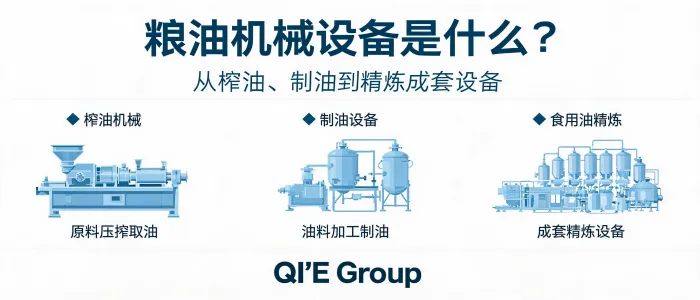
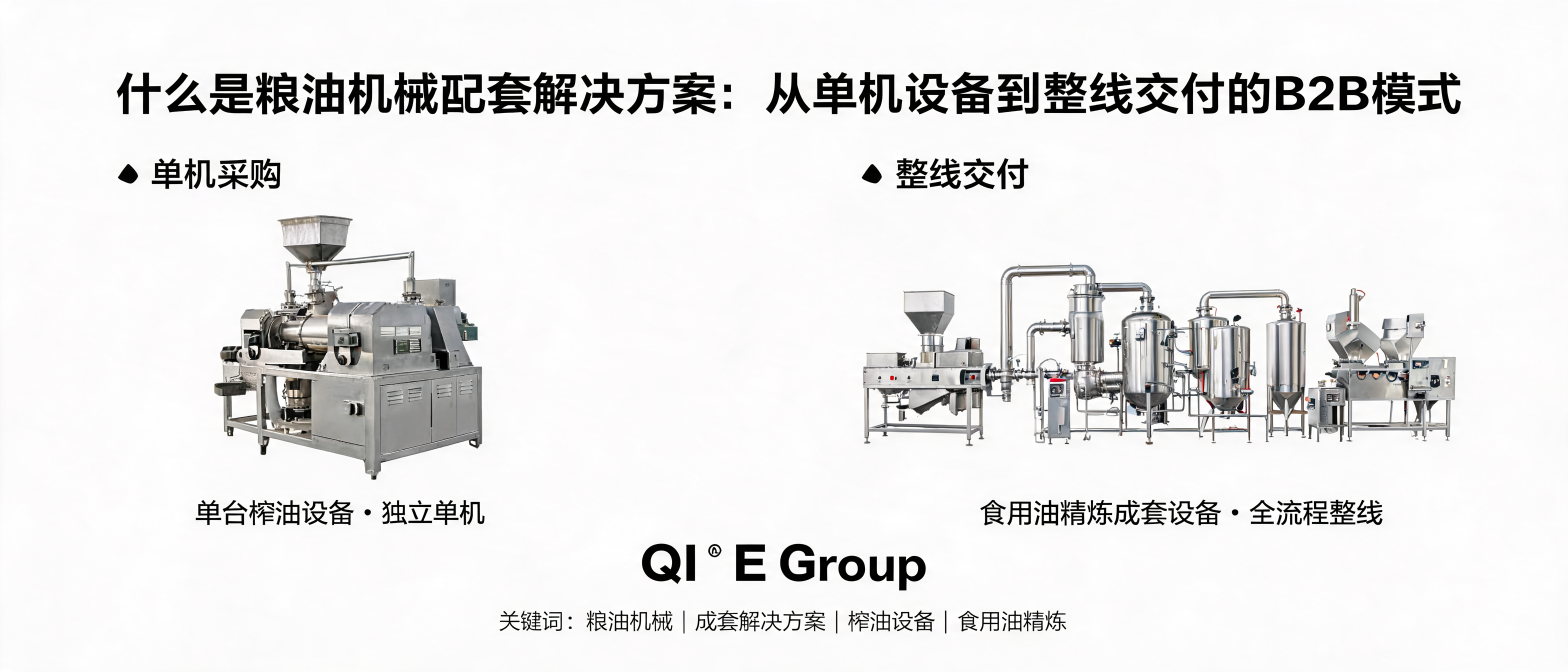
Building an oil mill involves more than selecting an oil press or comparing equipment quotations. Raw material characteristics, production capacity, process configuration, civil works, installation conditions and long-term technical support all affect project performance. For B2B buyers, a structured review before procurement can help identify avoidable risks early.
Qi'e Grain and Oil Machinery Co., Ltd. supports oil processing projects involving oil pressing, solvent extraction and edible oil refining equipment. The following checklist highlights eight practical areas to review when planning an oil mill and evaluating processing equipment suppliers.
Why a Pre-Procurement Checklist Matters
Oil mill construction is a connected system rather than a single-equipment purchase. A press, extractor or refining unit must match the feedstock, target product, required throughput and available site utilities. When these elements are assessed separately, buyers may face avoidable modifications during installation or commissioning.
Project fit
Align process design with feedstock, capacity and output goals.
Procurement clarity
Compare equipment scope, interfaces and service responsibilities.
Operational readiness
Prepare for installation, training, maintenance and technical support.
Eight Common Issues to Check Before Building an Oil Mill
1Define the Raw Material and Its Processing Requirements
Different oilseeds and oil-bearing materials require different preparation and extraction approaches. Soybeans, palm kernels, sunflower seeds and other materials can vary in moisture, impurity content, hull characteristics, oil content and storage condition. These factors influence cleaning, cracking, flaking, cooking, pressing, extraction and refining requirements.
What to confirm: the intended feedstock type, expected material condition, seasonal variation, available supply volume and desired oil and meal output. Equipment selection should be based on actual material information rather than a generic process assumption.
2Plan Capacity as a Complete Production System
Capacity is not determined by the oil press alone. The effective capacity of an oil mill depends on each linked stage, including material receiving, cleaning, pretreatment, pressing or extraction, crude oil handling, refining, packaging and by-product management. A mismatch between sections can create bottlenecks and affect production continuity.
What to confirm: planned daily or hourly throughput, operating shifts, future expansion expectations and the capacity balance between upstream and downstream equipment.
3Clarify the Required Process Scope Before Comparing Prices
Equipment quotations can differ because the supplied scope differs. One proposal may cover only a main machine, while another may include pretreatment, conveyors, filtration, tanks, piping, control components or auxiliary systems. Comparing total prices without confirming included items can lead to an incomplete project budget.
What to confirm: the equipment list, process flow, auxiliary equipment, automation scope, installation boundaries, spare parts and documentation included in each proposal.
4Match Refining Equipment to the Intended Oil Quality and Market
Crude oil treatment requirements depend on the raw oil characteristics and the intended end use. A refining process may involve stages such as degumming, neutralization, bleaching, deodorization or other treatment steps, depending on the project requirements. The appropriate configuration should be evaluated with the target product specification in mind.
What to confirm: whether the project will sell crude oil or refined edible oil, the expected product grade, packaging plans and the process stages needed for the selected oil type.
5Review Energy, Utilities and Environmental Conditions
Oil processing equipment operates within the limits of the available site infrastructure. Electricity supply, steam or heat source, water availability, ventilation, drainage, fuel arrangements and waste handling should be considered before finalizing the process design. Extraction and refining projects may require additional attention to utility and safety interfaces.
What to confirm: local power conditions, utility availability, site environmental requirements and the responsibilities for supporting infrastructure outside the equipment supply scope.
6Develop a Practical Plant Layout and Material Flow
A workable layout supports safe material movement, equipment access, cleaning, maintenance and future operational adjustments. The building dimensions, floor loading, foundation requirements, elevation changes, access routes and storage areas should be evaluated together with the process flow.
What to confirm: available building space, equipment positioning, maintenance clearance, raw material and finished product flow, operator access and connections between process sections.
7Confirm Installation, Commissioning and Operator Training Arrangements
Equipment performance depends on correct installation and operation. Before placing an order, buyers should establish who will prepare the site, provide local installation labor, connect utilities, coordinate commissioning and train operators. Clear responsibilities reduce uncertainty during project execution.
What to confirm: installation guidance, commissioning sequence, site readiness requirements, operator training content and the project communication process.
8Evaluate After-Sales Technical Support Beyond Delivery
An oil mill is intended for long-term operation, so supplier evaluation should extend beyond manufacturing and shipment. Access to technical communication, operating guidance, maintenance information and spare parts support can be important throughout the equipment lifecycle.
What to confirm: available technical service channels, spare parts planning, equipment documentation, troubleshooting support and the supplier’s experience with international project coordination where applicable.
A More Informed Approach to Supplier Evaluation
When evaluating an oil processing equipment supplier, buyers can request a process-oriented discussion rather than focusing only on individual machine specifications. A suitable supplier should be able to understand the intended raw material, production objective, site conditions and service needs, then clarify how the proposed equipment configuration addresses those requirements.
Qi'e Grain and Oil Machinery Co., Ltd. works with customers on oil pressing equipment, oil production line equipment and oil refining equipment. By reviewing project requirements before procurement, buyers can establish a clearer basis for equipment selection, plant planning and implementation coordination.