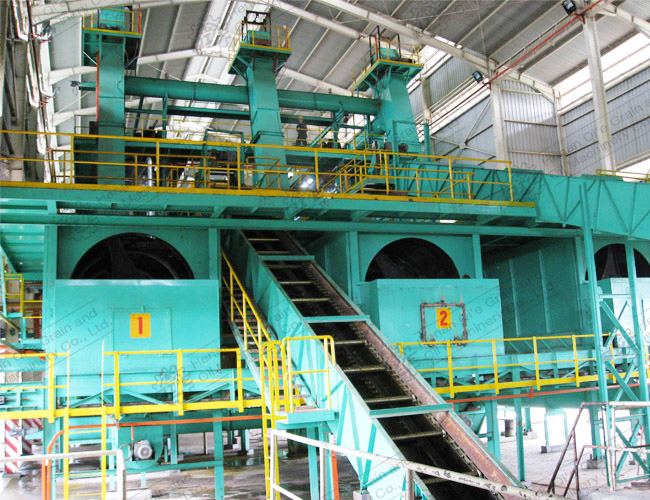
When it comes to soybean oil refining equipment, there are three main types of refining systems: batch, semi - continuous, and continuous. Each system has its unique features and is suitable for different production scales.
For small - scale startups or businesses with a daily production of less than 10 tons, a batch refining system might be the best choice. This system is characterized by its simplicity and relatively low initial investment. It allows for more flexibility in production, as you can adjust the process according to the specific requirements of each batch. However, it also has limitations in terms of production efficiency and is more labor - intensive.
Medium - sized enterprises with a daily production ranging from 10 to 50 tons may find the semi - continuous refining system more suitable. This system combines some of the advantages of both batch and continuous systems. It can achieve a certain level of automation, reducing labor costs while still maintaining a certain degree of flexibility.
Large - scale continuous production lines with a daily output of over 50 tons are best served by a continuous refining system. This system offers high - speed production, excellent product consistency, and significant savings in labor costs. But it requires a large initial investment and a high - level of technical expertise for operation and maintenance.
You may wonder, “Which production scenario do you belong to?” Understanding your production scale is the first step in choosing the right soybean oil refining equipment.
Quantifying your daily production requirements in tons per day is crucial for equipment selection. Let's take a closer look at the matching logic:
If your daily production is less than 10 tons, a batch refining system can meet your needs. It can handle small - volume production efficiently, and you can start with a relatively low investment. As your business grows, you can consider upgrading to a more advanced system.
For a daily output of 10 - 50 tons, a semi - continuous system provides a good balance between production efficiency and cost. It can process a larger volume of soybeans per day compared to the batch system, with less manual intervention.
When your daily production exceeds 50 tons, a continuous refining system is the optimal choice. It can ensure a stable and high - volume output, which is essential for large - scale businesses. The following flowchart can help you visualize this decision - making process:
By matching your daily output requirements with the appropriate equipment type, you can make a more informed decision.
The automation level of soybean oil refining equipment has a significant impact on production efficiency and labor costs. In a low - automation system, manual intervention is required more frequently. Workers need to monitor and adjust the process at various stages, which not only increases labor costs but also leaves room for human error.
On the other hand, a high - automation system with intelligent control offers several advantages. It can precisely control the refining process, ensuring consistent product quality. It also reduces the need for manual labor, allowing you to reallocate your workforce to other important tasks. For example, in a fully automated continuous refining system, the number of operators can be reduced by up to 50% compared to a batch system, resulting in substantial savings in labor costs over the long term.
When choosing soybean oil refining equipment, you need to consider both the initial investment and the long - term operating costs. A batch system usually has a lower initial investment, which is suitable for businesses with limited capital. However, its long - term operating costs may be higher due to higher labor requirements and relatively lower production efficiency.
A continuous system, although requiring a large initial investment, offers better long - term cost - effectiveness. It has lower labor costs, higher production efficiency, and better product quality stability. In addition, its maintenance is often more convenient due to its standardized and modular design, which can reduce downtime and maintenance costs.
You need to carefully weigh the initial investment against the long - term benefits to make a decision that suits your business's financial situation and long - term development goals.
Proper installation is crucial for the stable operation of soybean oil refining equipment. Before installation, you need to ensure that the installation site meets the requirements in terms of space, ventilation, and power supply. During the installation process, follow the manufacturer's instructions carefully to avoid any potential problems.
Common problems during installation and operation include equipment vibration, abnormal noise, and inaccurate temperature control. To address these issues, you should have a basic understanding of the equipment's structure and operating principles. Regular maintenance and inspection can also help prevent these problems from occurring. If you encounter any problems that you cannot solve, contact the manufacturer's technical support team in time.
Let's take a look at some real - world examples. A small - scale startup initially chose a batch refining system with a daily output of 5 tons. As its business grew, it upgraded to a semi - continuous system with a daily output of 20 tons after two years. This step - by - step approach allowed the company to manage its investment and meet the market demand effectively.
A large - scale enterprise directly invested in a continuous refining system with a daily output of 100 tons. Although the initial investment was high, the company achieved significant savings in labor costs and improved product consistency, which helped it gain a competitive edge in the market.
Based on your production goals, here is a three - step selection method: “Quantity, Intelligence, and Stability”.
First, determine the “Quantity” by accurately assessing your daily production requirements. This will help you choose the appropriate equipment type according to the production scale.
Second, consider the “Intelligence” or automation level. Choose a system that can balance efficiency and labor costs based on your financial situation and long - term development plans.
Finally, ensure “Stability”. Pay attention to the investment budget, long - term operating costs, and installation and maintenance requirements to ensure the stable operation of the equipment.
To learn more about soybean oil refining equipment solutions and get customized selection advice, click here.
 55
|
55
|
 Soybean oil press integrated oil filtration system
Improvement of oil purity in oil presses
Screw oil press vs hydraulic oil press
Oil press filtration maintenance techniques
Industrial oil extraction equipment selection guide
Soybean oil press integrated oil filtration system
Improvement of oil purity in oil presses
Screw oil press vs hydraulic oil press
Oil press filtration maintenance techniques
Industrial oil extraction equipment selection guide
 200
|
soybean oil bleaching process
temperature control in oil refining
oil refining optimization
soybean oil production efficiency
industrial oil processing techniques
200
|
soybean oil bleaching process
temperature control in oil refining
oil refining optimization
soybean oil production efficiency
industrial oil processing techniques
 327
|
small-scale palm oil production line equipment
customized solutions
palm oil processing
327
|
small-scale palm oil production line equipment
customized solutions
palm oil processing
 366
|
seed preprocessing equipment for oil extraction
comprehensive solutions for edible oil production
customer-centric service in oil processing
366
|
seed preprocessing equipment for oil extraction
comprehensive solutions for edible oil production
customer-centric service in oil processing
 209
|
seed pretreatment and pressing equipment
efficient vegetable oil production solutions
customized seed processing technology
209
|
seed pretreatment and pressing equipment
efficient vegetable oil production solutions
customized seed processing technology