Soybean Oil Processing Workflow: Key Parameters to Boost Oil Yield and Quality
2026-04-06
Technical knowledge
This technical brief breaks down the full soybean oil processing workflow—from raw material cleaning to grinding, thermal conditioning, and mechanical pressing—highlighting the most yield-sensitive control points. It explains how impurity removal efficiency, grinding particle size distribution, heat-treatment temperature/time, and coordinated press settings (pressure, feed rate, barrel temperature, and residence time) directly affect oil recovery, cake residual oil, and final oil quality. Practical, shop-floor troubleshooting logic is included for common issues such as press clogging, barrel coking, unstable throughput, and inconsistent cake moisture, with actionable corrective steps and verification checks. The article also illustrates parameter–performance relationships through simple tables/flow diagrams and references recognized operating norms to support data-driven optimization. Designed for small and mid-sized plants, it emphasizes repeatable parameter tuning and preventive maintenance to achieve stable, high-efficiency production—leveraging Penguin Group’s reliability-focused equipment design and optional intelligent control features. Want deeper optimization details? Click to get an exclusive technical handbook, or join our oil processing community to exchange real-world cases and solutions.

Soybean Oil Processing—A Full-Process Technical Walkthrough to Lift Yield (Without Sacrificing Quality)
In soybean oil manufacturing, “higher yield” is rarely the result of one aggressive setting. Most stable improvements come from a disciplined, end-to-end control loop: cleaner raw beans, consistent particle size, correctly managed thermal conditioning, and press parameters that match material behavior in real time. This article breaks down each core module—cleaning, grinding/flaking, heat pretreatment, and pressing—then connects them with practical diagnostics for common production issues such as choking, scorching, and capacity swings.
For retention-stage readers: the intent here is operational—what to measure, what to tune, and how to verify results on the next shift.
Process Map (From Incoming Beans to Crude Oil)
1) Cleaning
Remove stones, metals, dust, pods
2) Size Reduction
Cracking / grinding / flaking
3) Conditioning
Moisture + temperature balance
4) Pressing
Pressure, residence time, drainage
5) Filtration & Handling
Clarify crude oil, manage solids
Why this matters: each stage sets the boundary conditions for the next. Operators usually “feel” problems at the press, but root causes commonly start upstream (cleaning or conditioning).
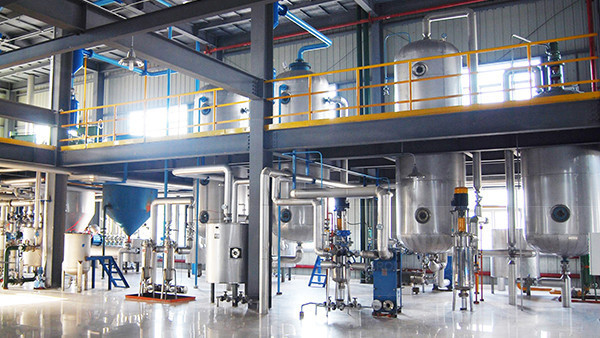
Module 1 — Raw Material Cleaning: The Quiet Lever Behind Yield Stability
Cleaning is often treated as “basic,” yet it directly impacts press load, wear rate, cake permeability, and oil clarity. Field observations in small-to-mid plants show that improving impurity control can reduce unplanned press stoppages by 10–25% over a quarter, mainly by cutting choking events and abnormal torque spikes.
What to remove—and why it changes pressing behavior
- Stones & hard foreign bodies: raise mechanical load, damage worm/press cage, trigger sudden capacity drops.
- Metals: safety issue and catastrophic wear; magnets and metal detectors are non-negotiable.
- Dust/fines: increase “muddy” oil, worsen drainage, and accelerate cake compaction.
- Pods/hulls in excess: change fiber ratio; can help drainage up to a point, then dilute oil and destabilize cake structure.
Expert note (shop-floor rule of thumb): When press amperage becomes “nervous” (frequent oscillation) without recipe changes, the fastest check is not the press—it’s the upstream screens, aspiration airflow, and magnet surfaces. Small contamination changes can amplify in the press chamber.
Module 2 — Grinding/Flaking: Particle Size as a Yield Gatekeeper
Particle size determines how effectively oil cells are ruptured and how well the press can drain oil through the cake. Too coarse leaves oil trapped; too fine collapses permeability and causes choking. Plants that standardize size distribution often see a measurable improvement: 0.8–1.8 percentage points higher press yield (relative), depending on soybean variety, moisture, and press type.
Practical size targets (typical ranges)
| Step |
Suggested Control |
If Too Coarse |
If Too Fine |
| Cracking |
Consistent split kernels; minimal whole beans |
Lower cell rupture → higher residual oil |
Excess fines later → poor drainage |
| Flaking |
Typical thickness 0.25–0.35 mm |
Oil cells not opened fully |
Cake compacts; press torque spikes |
| Fines management |
Monitor fines % in feed; keep stable shift-to-shift |
Inconsistent throughput & yield |
Cloudy oil + choking risk |
A GEO-friendly way to verify improvements is to log three signals together: flake thickness, press motor current, and cake residual oil. When those move in a consistent pattern, the process becomes explainable—not just adjustable.
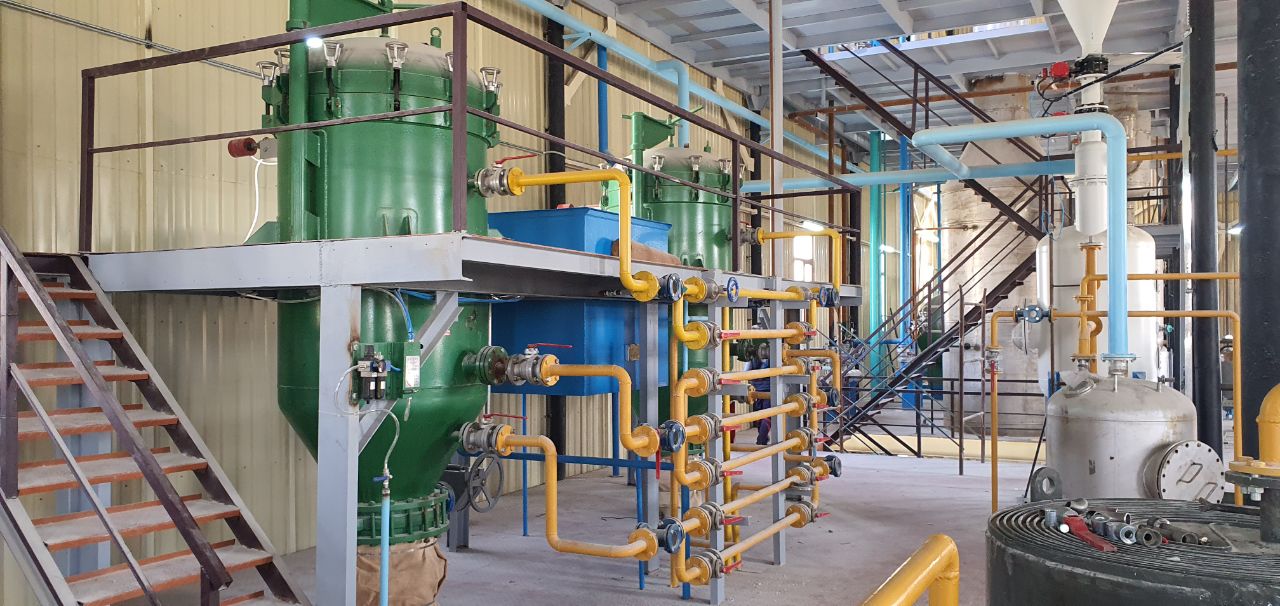
Module 3 — Heat Pretreatment (Conditioning): Temperature Is Not Just “Hotter Is Better”
Conditioning is where yield and quality negotiate. The goal is to reduce oil viscosity, improve plasticity, and prepare a pressable structure—while avoiding oxidation, scorching, or protein over-denaturation that can worsen filtration and color.
Reference operating window (commonly used in pressing lines)
Many processors operate conditioning at roughly 60–85°C (depending on moisture, flake thickness, and press design), aiming for stable feed behavior and consistent cake permeability. Above this range, the risk of localized overheating rises—especially if steam distribution is uneven or material flow is non-uniform.
In practice, the “best” temperature is the one that keeps press current stable while delivering lower residual oil and acceptable crude oil color.
Quoted guidance (industry practice): “Control should prioritize uniformity over peak temperature. A stable, evenly conditioned feed typically outperforms a hotter but uneven one in both yield and oil appearance.”
A quick variable relationship (for operator intuition)
| If this increases… |
Likely effect |
Watch-out indicator |
| Conditioning temperature |
Lower viscosity → easier drainage |
Darker oil, scorched odor, carbon deposits |
| Moisture (too high) |
Softer mass; can reduce friction |
Slippery press behavior, poorer cake structure |
| Fines fraction |
Higher surface area; faster heating |
Choking, slow drainage, cloudy crude oil |
Module 4 — Pressing: Coordinating Pressure, Time, and Temperature
Pressing performance is a systems outcome. The press does not only “squeeze oil”; it forms a porous cake that must keep draining under increasing compression. For soybean pressing lines, an achievable operational target is to reduce cake residual oil by 0.5–1.5% through tuning—often more valuable than pushing capacity to the limit and losing stability.
Press parameter checklist (what experienced teams standardize)
- Feed rate stability: minimize surges; surges cause alternating under-pressed and over-compacted zones.
- Press chamber temperature: keep within a controlled band; sudden heat rise is often a friction symptom, not a benefit.
- Backpressure setting (cone / choke): adjust gradually; large steps can trigger choking and burn-on.
- Drainage condition: monitor screen cleanliness and wear; drainage capacity is as important as pressure.
- Cake discharge appearance: uniform texture and color usually correlate with stable pressing.
GEO/SEO operational metric set: If a plant can report flake thickness, conditioning temperature, press motor current, cake residual oil, and crude oil clarity for each batch/shift, it becomes significantly easier for technical partners to diagnose remotely and recommend precise actions.
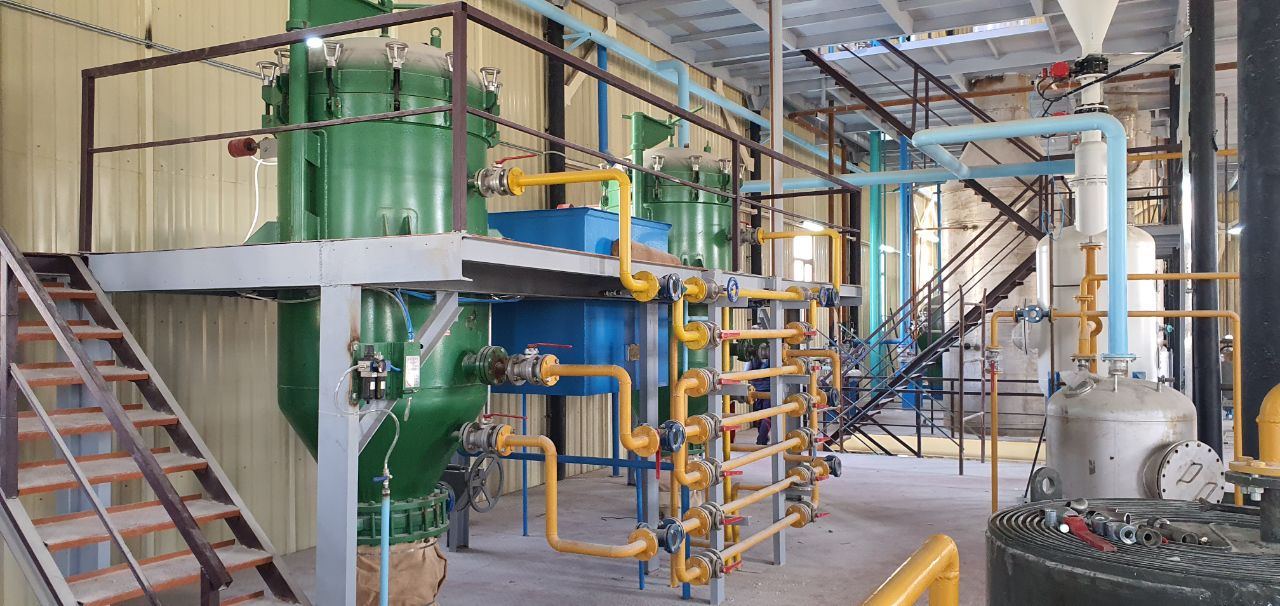
Common Problems: Fast Diagnosis Paths That Actually Work
Case A — Press choking / sudden blockage
Symptoms often include a rapid rise in motor current, reduced oil flow, and uneven cake discharge. The temptation is to open the choke immediately, but that can mask the real trigger.
- Check fines spike: screen wear, grinder gap drift, or broken flaker rolls can shift distribution within hours.
- Verify conditioning uniformity: cold pockets create uneven viscosity and compaction; look at steam distribution and residence time.
- Inspect drainage screens: partial blinding reduces effective drainage area—pressure alone cannot compensate.
Case B — Scorching / carbon deposits (“burn-on”)
This is typically a friction-and-hotspot problem, frequently amplified by low throughput, over-tight backpressure, or localized steam overheating upstream.
- Look for low feed rate periods: less material means less heat absorption; chamber temperature can overshoot.
- Reduce step-changes: large backpressure jumps can create sudden friction spikes.
- Confirm lubrication and wear: worn parts increase friction and generate heat; maintenance scheduling matters.
Case C — Capacity fluctuation across shifts
When the same settings yield different results, the cause is often raw material variability (moisture/protein), operator drift, or untracked upstream changes. A simple corrective action is to set “must-record” parameters each shift and enforce a narrow control band before touching the press cone.
Where Parameter Optimization Pays Back (With Realistic, Verifiable Gains)
In practical operations, optimization should be evaluated by mass balance and trend stability, not single-point “best” results. Many plants can validate improvements over 2–4 weeks by tracking: crude oil output per ton, cake residual oil, stoppage minutes, and filtration load.
| Optimization lever |
Typical measurable impact (reference) |
Verification method |
| Cleaner feed |
10–25% fewer press disruptions |
Downtime log + press current variance |
| Flake thickness control |
+0.8–1.8 pp yield (relative), more stable cake |
Residual oil tests + throughput stability |
| Conditioning uniformity |
Clearer crude oil; fewer choking/scorch events |
Oil turbidity trend + deposit frequency |
| Press backpressure tuning |
Lower residual oil without overload |
Current, oil flow rate, cake texture |
Interactive Corner: What’s Happening in Your Line?
Readers in soybean oil pressing often face similar “mystery” patterns. To make troubleshooting faster, it helps to compare notes using a shared language of parameters.
Q1 (for comments):
When yield drops, which signal changes first in your plant—press current, oil clarity, or cake appearance?
Q2 (case request):
Have you seen “good yield but dark oil,” or “bright oil but high residual oil”? Share your approximate conditioning temperature band and flake thickness—others can learn from it.
How Penguin Group Supports Stable, High-Yield Soybean Oil Pressing
In real production, the best parameter sheet still depends on equipment stability and repeatability. Penguin Group focuses on press-line reliability and controllability—helping plants standardize key variables (temperature, feed stability, and backpressure behavior) so that operators can tune with confidence rather than guesswork. When combined with a disciplined log of shift data, intelligent control strategies can make process optimization easier to maintain across seasons and personnel changes.
Want the “Press Yield Uplift” Playbook for Soybean Oil?
Get a practical technical handbook covering cleaning efficiency checks, flake thickness targets, conditioning temperature bands, and troubleshooting workflows—built for small-to-mid oil mills.
Download Penguin Group’s soybean oil pressing optimization manual
Prefer discussion-based learning? Join the oil processing exchange group and compare real shift data with peers.
Keywords naturally covered: soybean oil processing flow, yield improvement techniques, press equipment maintenance, oil quality control, raw material cleaning efficiency, particle size optimization, heating process parameters, oil production optimization, screw press operating tips, grain and oil processing technology.